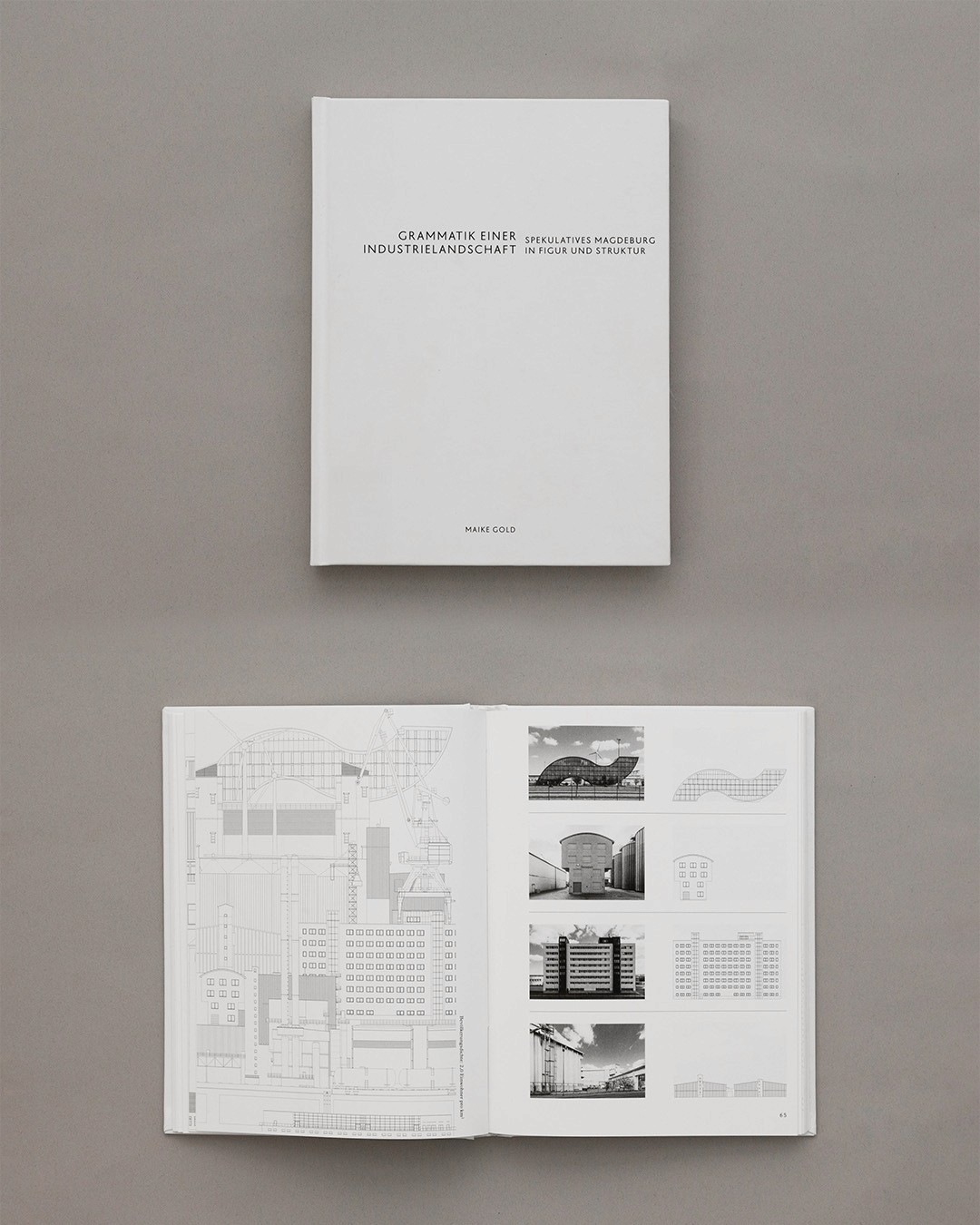
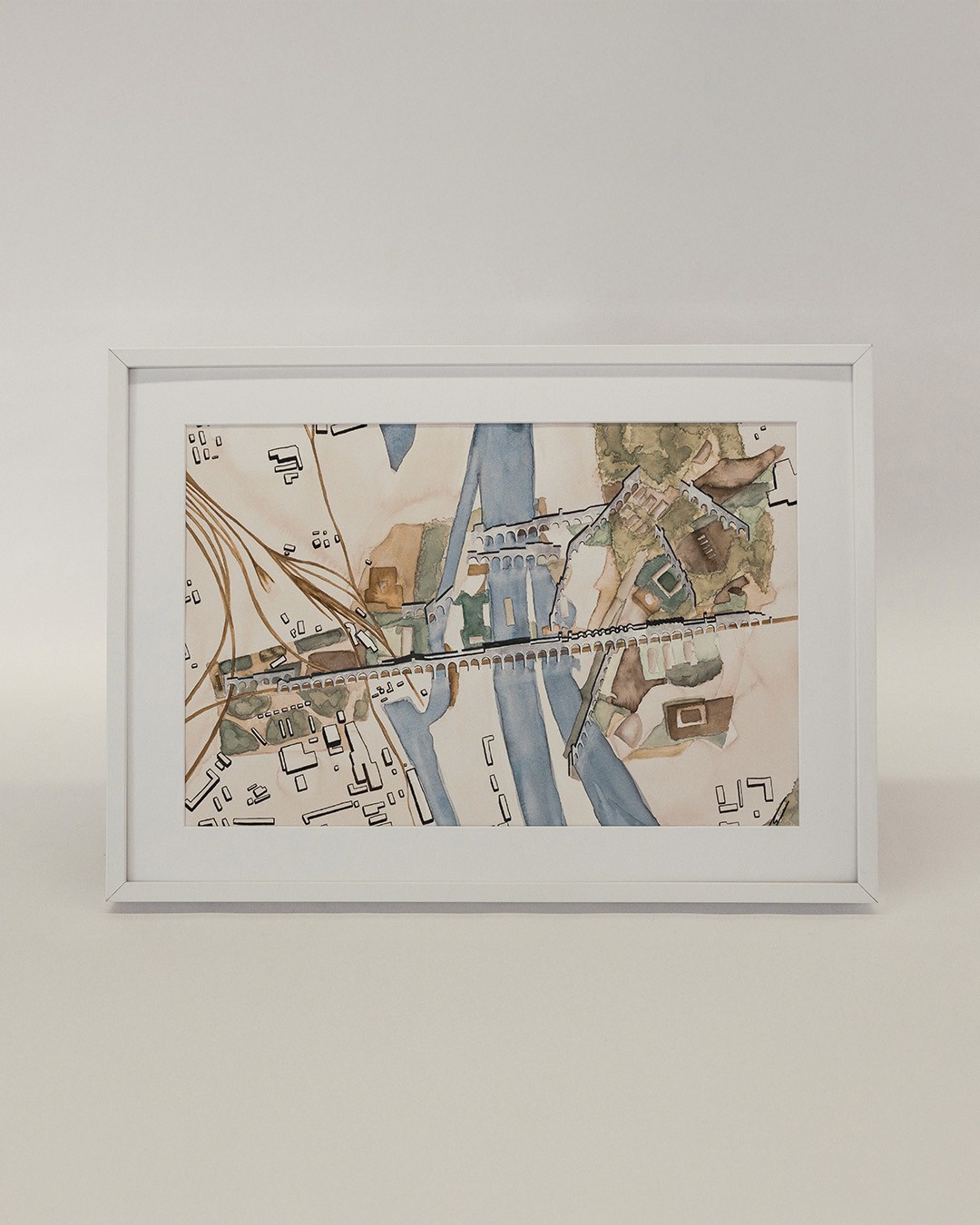
Grammar of an Industrial Landscape
Master's Thesis at the Graz University of Technology (AUT), Faculty of Architecture (2020)
The master's thesis was awarded the Graz Architecture Prize GAD'2021 and subsequently published in: Appendix of Thinking Design – Blueprint for an Architecture of Typology, Park Books, pp. 8-9. Further information: www.andreaslechner.at
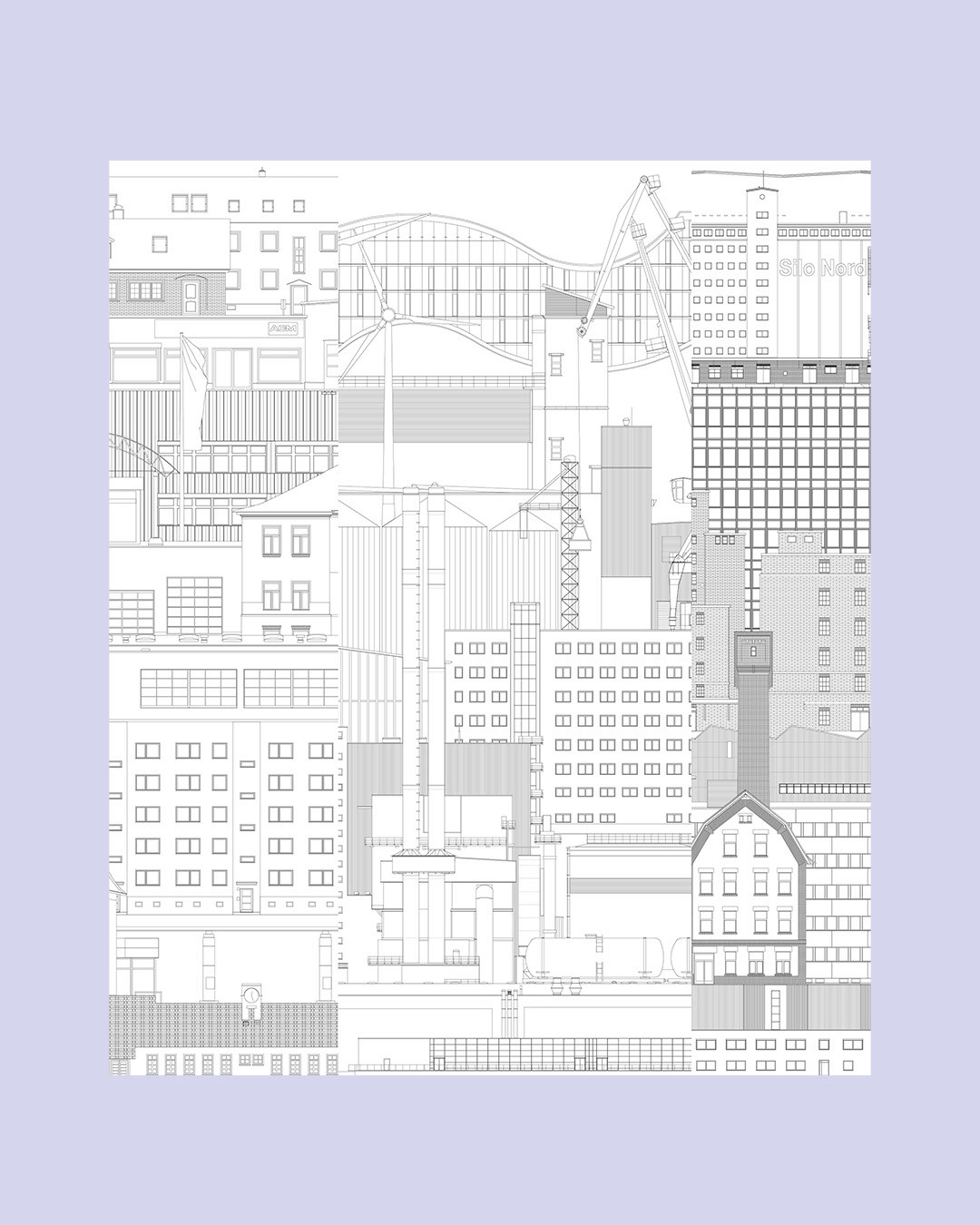
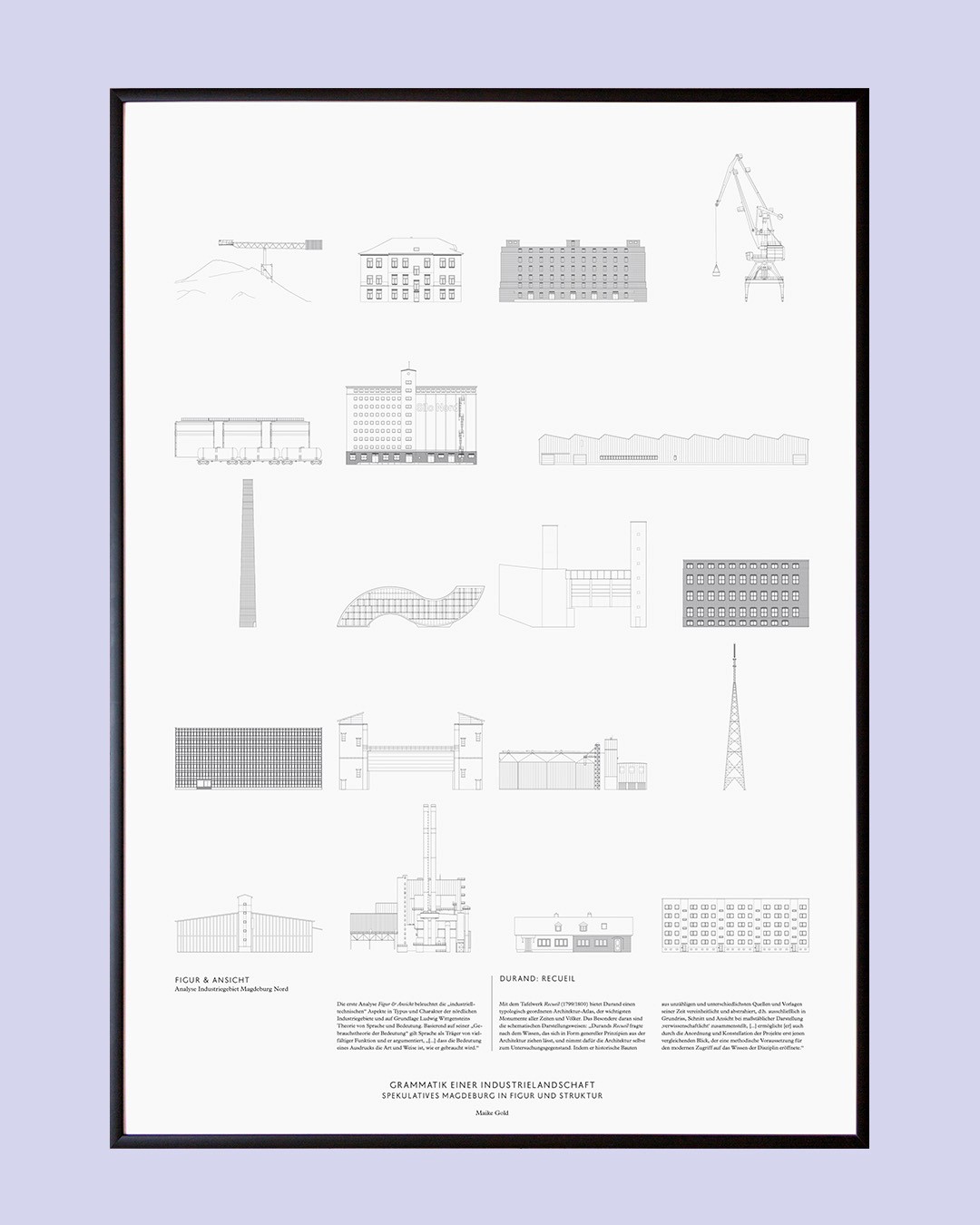
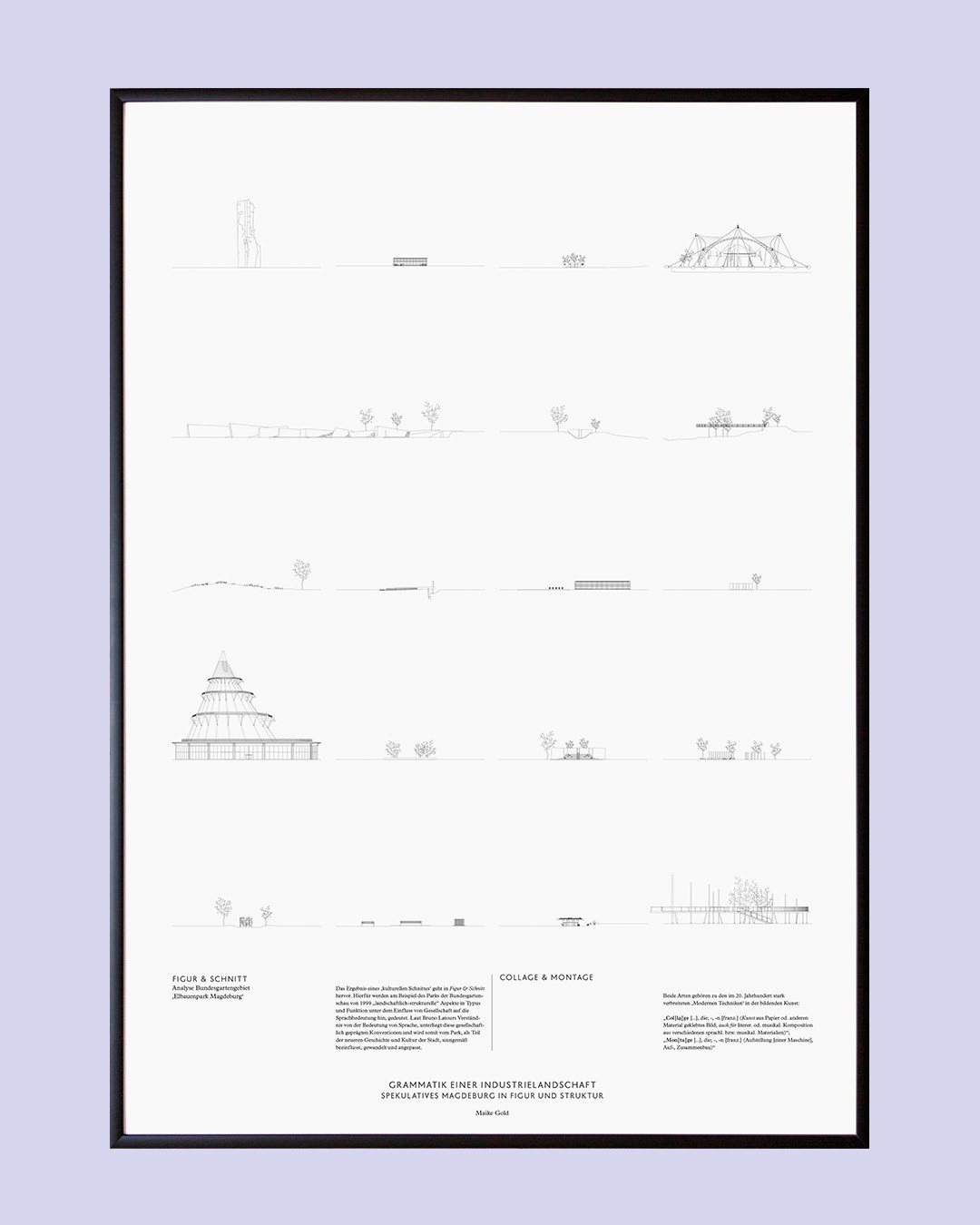
This thesis investigates the industrial and infrastructural urban form of Magdeburg—including its patterns, elements and latent spatial logic—and translates these findings into an architectural "grammar". Using mapping, decoding and architectural notation, the thesis identifies components that form the city's identity within the existing structure and recombines them into new relationships. The aim is to develop a language specific to Magdeburg that strengthens its architectural identity, countering the perceived lack of place associated with contemporary infrastructure and construction.
Magdeburg’s identity is closely linked to its landscape and waterways, particularly its relationship with the River Elbe and its position within the waterway network of central Germany. The analysis reveals a pronounced inner-city "void", shaped by traffic infrastructure and industrial land use. Building on an immanent grammar derived from existing elements, the thesis proposes new connections between the northern industrial areas and the inner-city fabric.
Methodologically, the project combines a detailed examination of industrial, landscape and infrastructural layers with references to wider discussions on the re-qualification of industrial urban areas (e.g. Industrial Urbanism: Places of Production, 2014) and European agglomeration territories (e.g. After-Sprawl, 2002). The resulting speculative design framework highlights development potential through the presence and absence of qualities and gaps, making Magdeburg’s industrial landscape legible as a driver for future spatial transformation.